
Home Hazards That Increase Fall Risk: A Room-by-Room Guide for Seniors
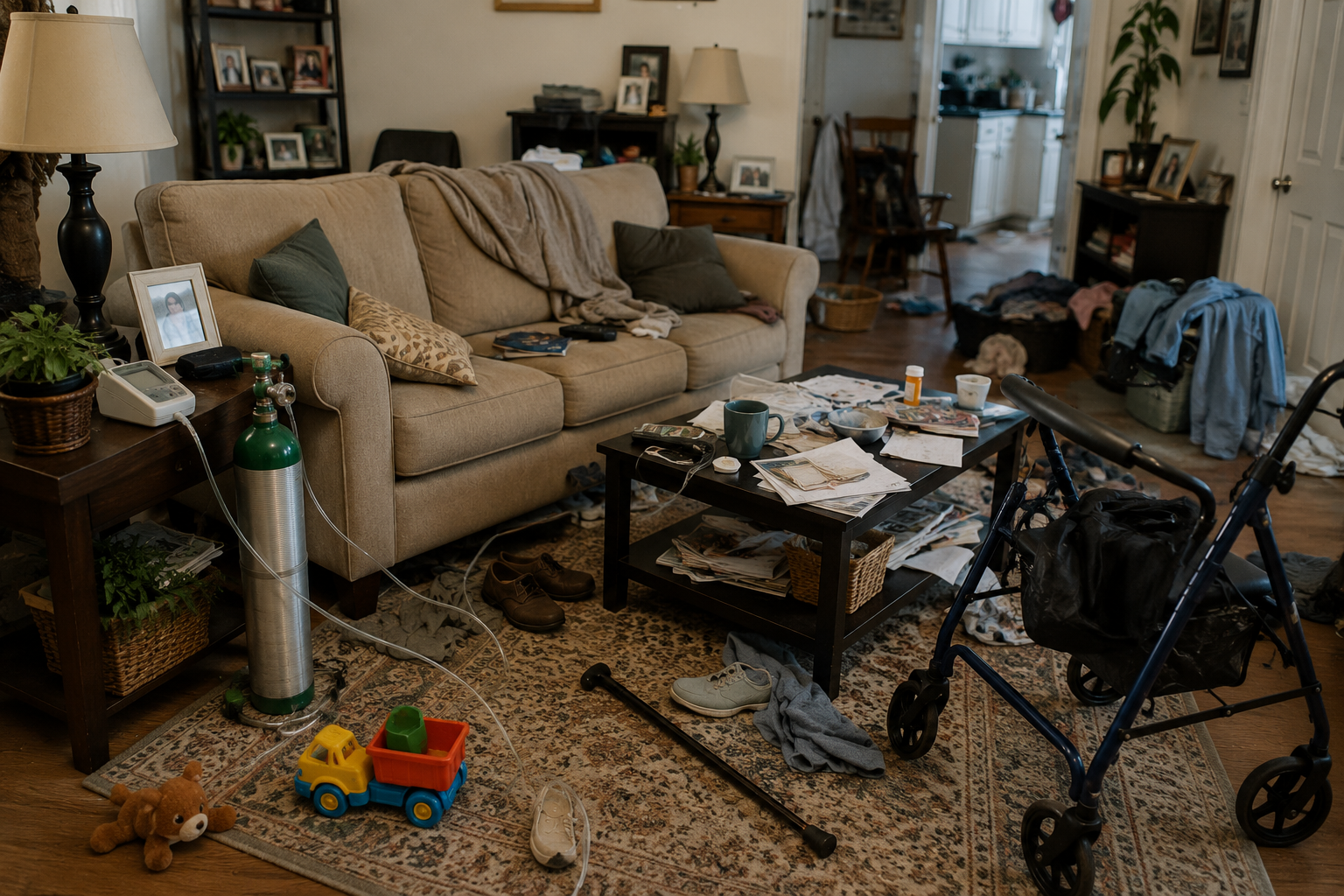
Home hazards that increase fall risk are one of the most common reasons older adults fall at home. Many hazards are easy to overlook, but small changes can make the home safer and easier to move through.
What You'll Learn
Why Home Safety Matters for Fall Prevention
Falls often happen during everyday activities such as walking to the bathroom, getting out of bed, reaching in the kitchen, or moving around furniture. By identifying home hazards that increase fall risk, families can make practical changes before a fall occurs.
The CDC's STEADI fall prevention initiative provides education and tools to help older adults reduce fall risk. Learn more from the CDC.
Living Room Home Hazards That Increase Fall Risk
The living room is often where people spend the most time, but it can contain hidden tripping hazards.
Watch For
- Loose throw rugs
- Electrical cords crossing walkways
- Clutter on floors
- Low coffee tables and footstools
- Poor lighting
- Oxygen tubing across walking paths
- Children's toys or pet toys on the floor
Safety Tips
- Remove or secure loose rugs.
- Keep walkways clear.
- Arrange furniture to allow easy movement.
- Add lamps or brighter bulbs in dim areas.
- Keep oxygen tubing organized and away from main walking paths.
- Encourage family members to pick up toys after use.
Bedroom Home Hazards That Increase Fall Risk
Getting up during the night can increase fall risk, especially when lighting is poor or pathways are blocked.
Watch For
- Dark pathways to the bathroom
- Loose bedding dragging onto the floor
- Clutter near the bed
- Low bed height
- Shoes beside the bed
- Clothing left on the floor
Safety Tips
- Install night lights between the bed and bathroom.
- Keep a lamp within easy reach.
- Remove clutter, clothing, and shoes from walking areas.
- Make sure both feet can touch the floor when sitting on the bed.
- Keep frequently used items within reach.
Bathroom Home Hazards That Increase Fall Risk
Bathrooms are one of the most common locations for serious falls because surfaces can become wet and slippery.
Watch For
- Wet floors
- Slippery tubs and showers
- Lack of grab bars
- Low toilets
- Loose bathroom rugs
Safety Tips
- Install grab bars near the toilet and inside the shower.
- Use non-slip bath mats.
- Remove loose throw rugs or secure them with non-slip backing.
- Consider a shower chair if balance is limited.
- Improve lighting around sinks, mirrors, and shower areas.
Kitchen Home Hazards That Increase Fall Risk
The kitchen can present several fall hazards because of spills, reaching, turning, and frequent movement.
Watch For
- Wet or slippery floors
- Throw rugs near sinks
- Items stored on high shelves
- Cluttered countertops
- Open cabinet or dishwasher doors
- Pet food or water bowls on the floor
Safety Tips
- Clean spills immediately.
- Remove loose rugs or use non-slip backing.
- Store frequently used items at waist-to-shoulder height.
- Keep walkways clear.
- Close cabinet and appliance doors after use.
- Keep pet bowls away from walking paths.
Stair Hazards That Increase Fall Risk
Stairs present one of the highest fall risks in the home, especially when lighting, handrails, or flooring are unsafe.
Watch For
- Missing or loose handrails
- Loose carpeting
- Poor lighting
- Objects stored on steps
- Pets crossing your path
Safety Tips
- Use handrails every time.
- Keep stairs clear.
- Make sure stair lighting is bright and functional.
- Repair loose or damaged flooring promptly.
- Be aware of pets when using stairs.
- Avoid carrying large items that block your view of the steps.
When to Seek Professional Help
You may benefit from a physical therapy evaluation if you:
- Have fallen recently
- Feel unsteady while walking
- Frequently lose your balance
- Avoid activities because you are afraid of falling
- Notice worsening balance, strength, or endurance
Early intervention can help reduce fall risk and improve confidence with daily activities.
Concerned About Fall Risk at Home?
Continuity Healthcare provides outpatient physical therapy in the comfort of your home. We help older adults improve balance, strength, walking safety, endurance, and confidence with daily activities.
Start Therapy at Home