
7 Balance Exercises for Seniors at Home: Improve Stability and Reduce Fall Risk
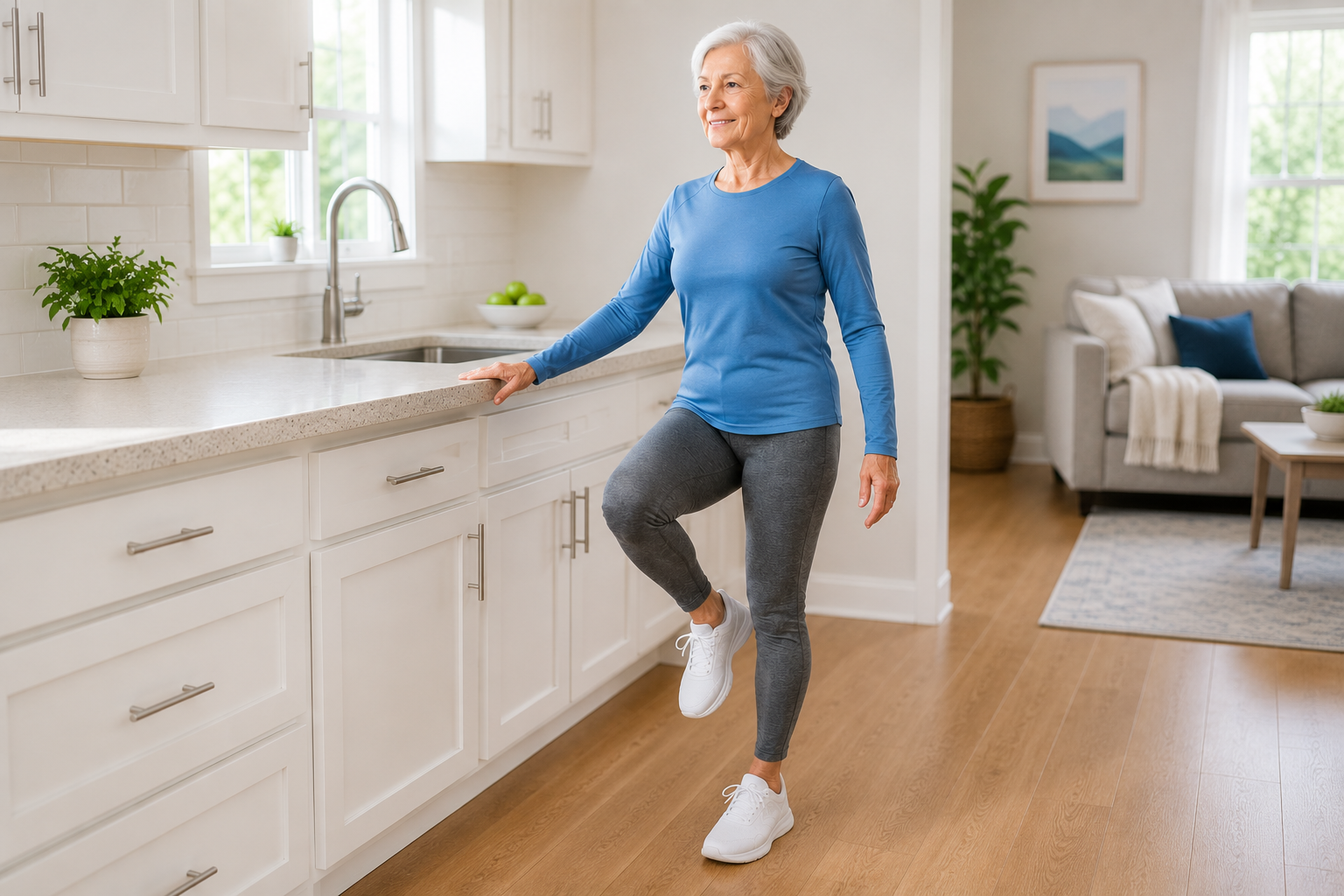
Balance exercises for seniors can improve stability, confidence, mobility, and walking safety while helping reduce fall risk. These simple exercises can often be performed at home with little to no equipment when completed near a sturdy support surface.
What You'll Learn
Why Balance Matters
Learn how balance supports walking, transfers, household tasks, and daily independence.
How to Exercise Safely
Use simple safety tips to reduce fall risk while practicing at home.
7 Balance Exercises
Follow clear visual guides and step-by-step instructions.
When to Get Help
Know when a physical therapy assessment may be appropriate.
Why Balance Matters as We Age
Good balance helps older adults stay steady on their feet, prevent falls, walk with more confidence, and remain independent at home. Balance can change with age because of reduced strength, slower reaction time, vision changes, medication side effects, neuropathy, stiffness, or fear of falling.
7 Balance Exercises for Seniors at Home
These balance exercises for seniors are designed for education and general wellness. They should not replace medical advice. Start slowly, use support as needed, and only perform exercises that feel safe for you.
Download Printable Balance Exercise Guide
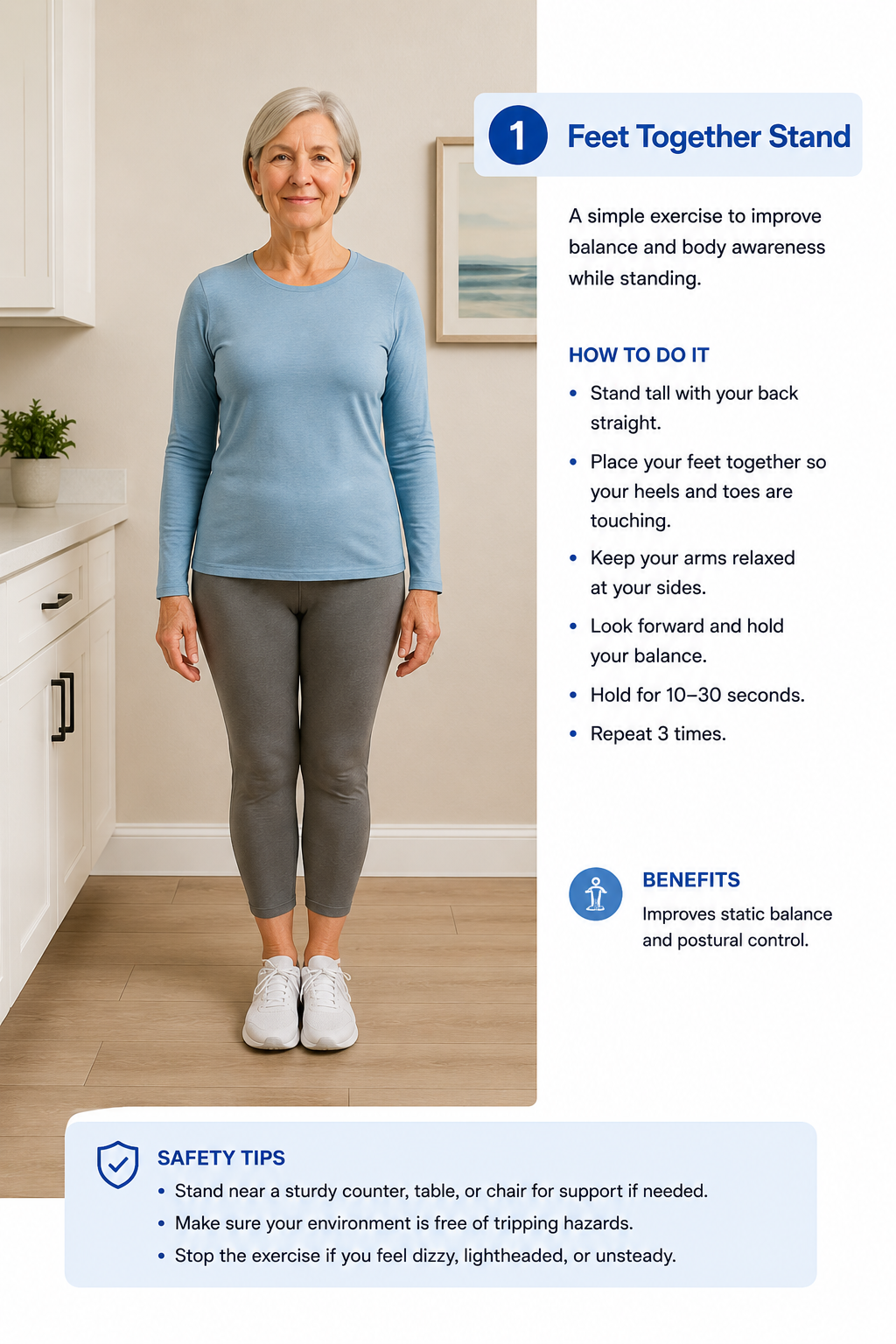
Feet Together Stand
Stand with your feet together and your arms at your sides. Hold for 20–30 seconds.
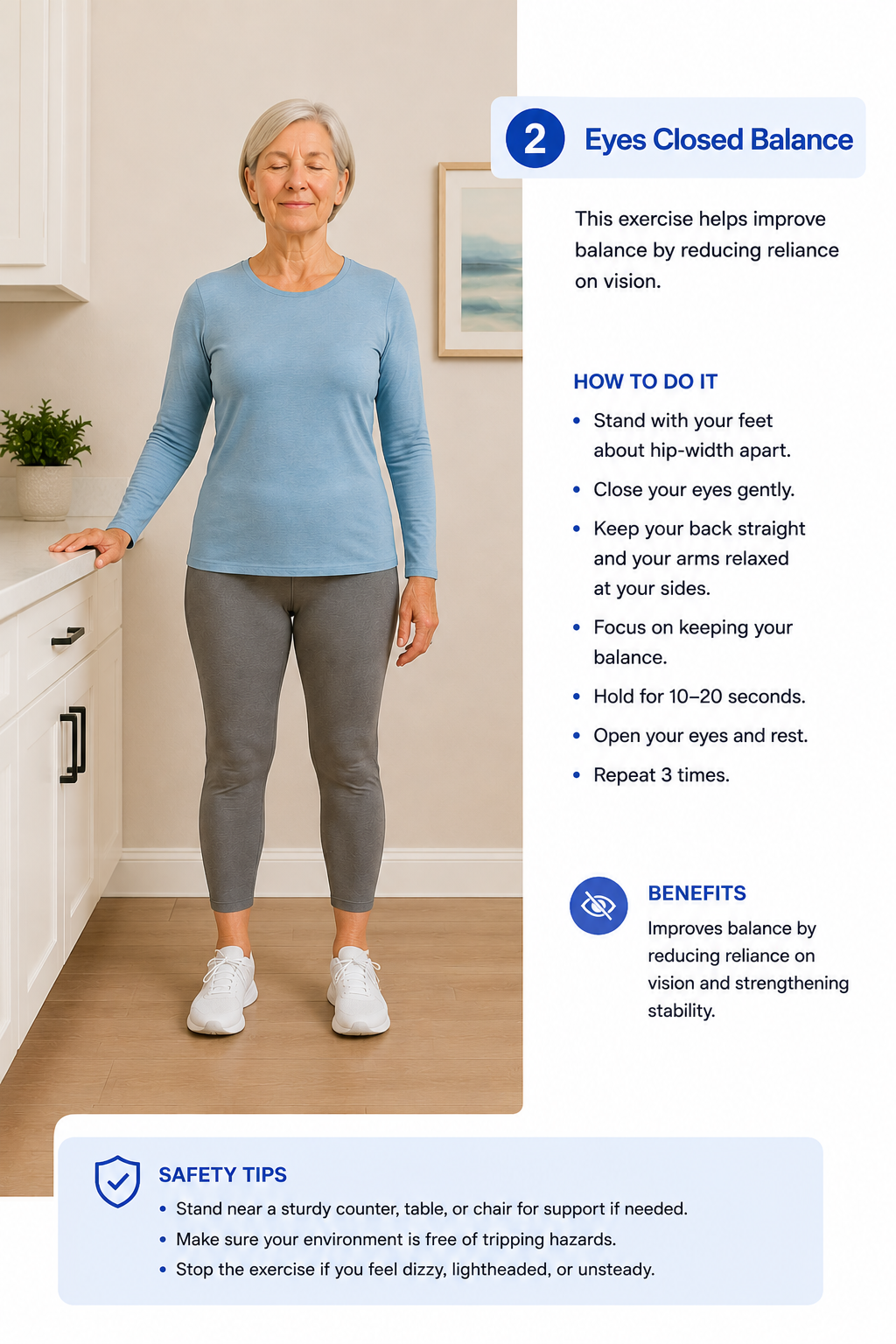
Eyes Closed Balance
Stand near support with your feet apart. Close your eyes briefly while staying steady.
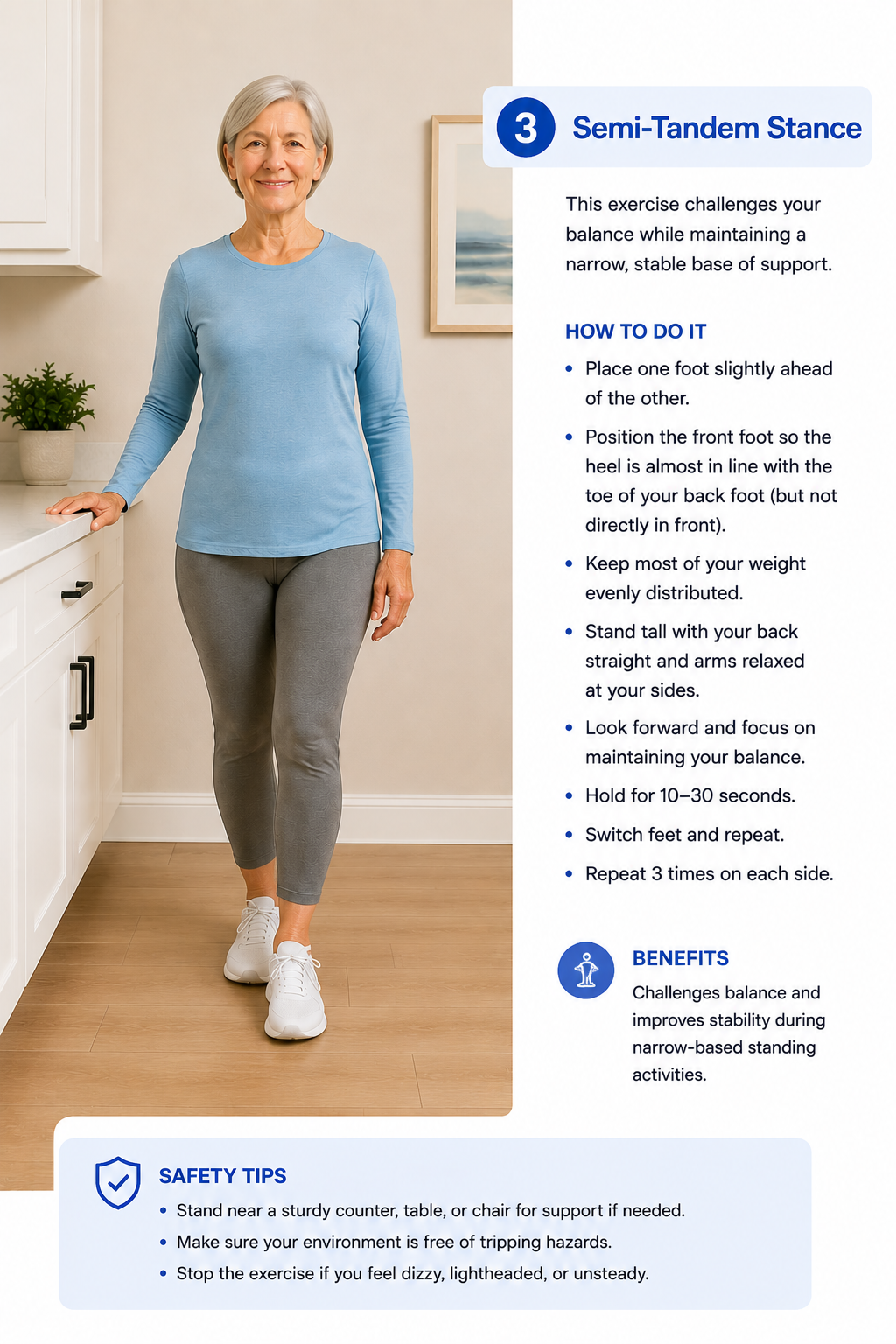
Semi-Tandem Stance
Place one foot slightly in front of the other. Hold for 20–30 seconds, then switch sides.
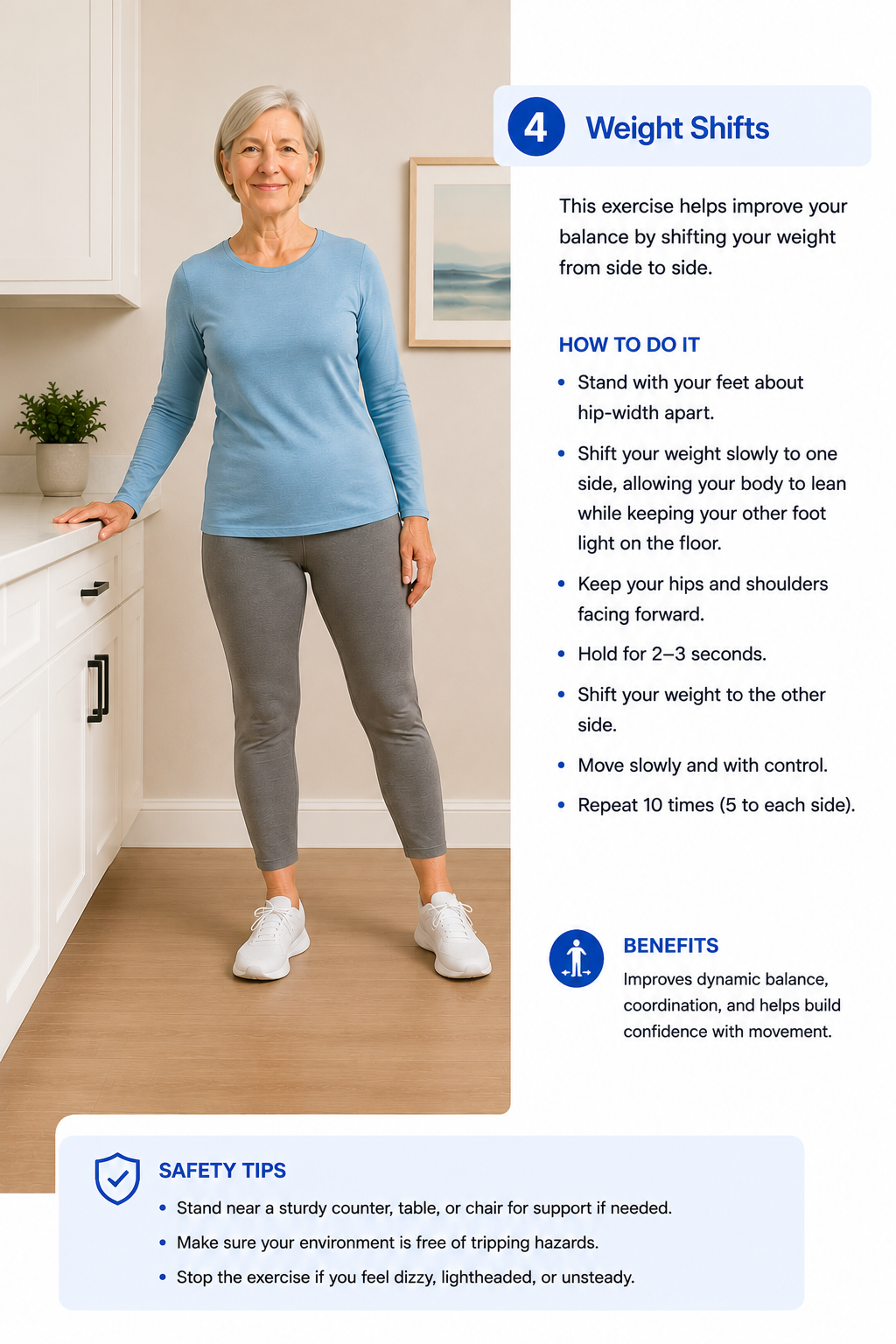
Weight Shifts
Shift your weight slowly from one foot to the other. Repeat 10–15 times.
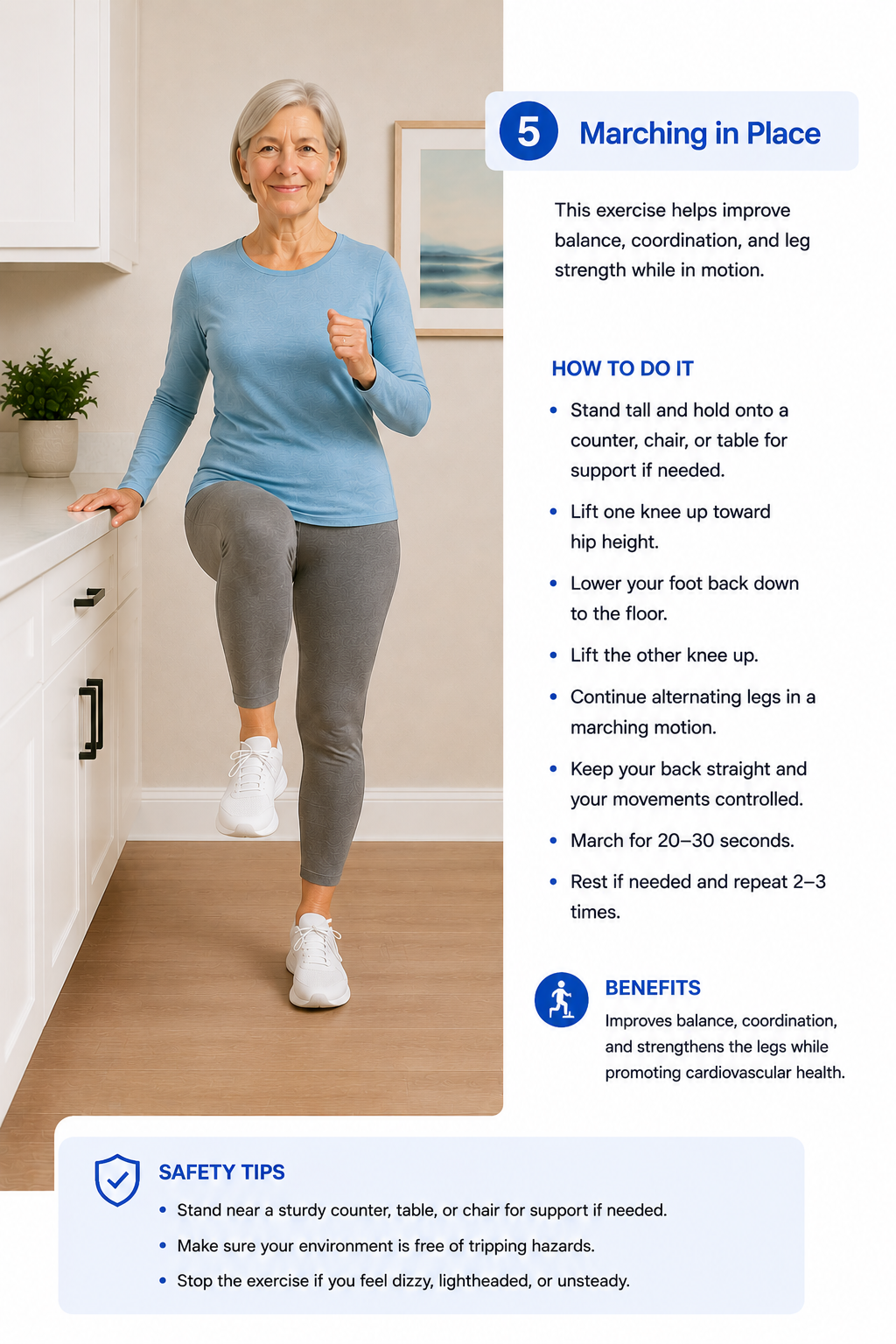
Marching in Place
Hold the counter and lift one knee at a time. March slowly for 30–60 seconds.
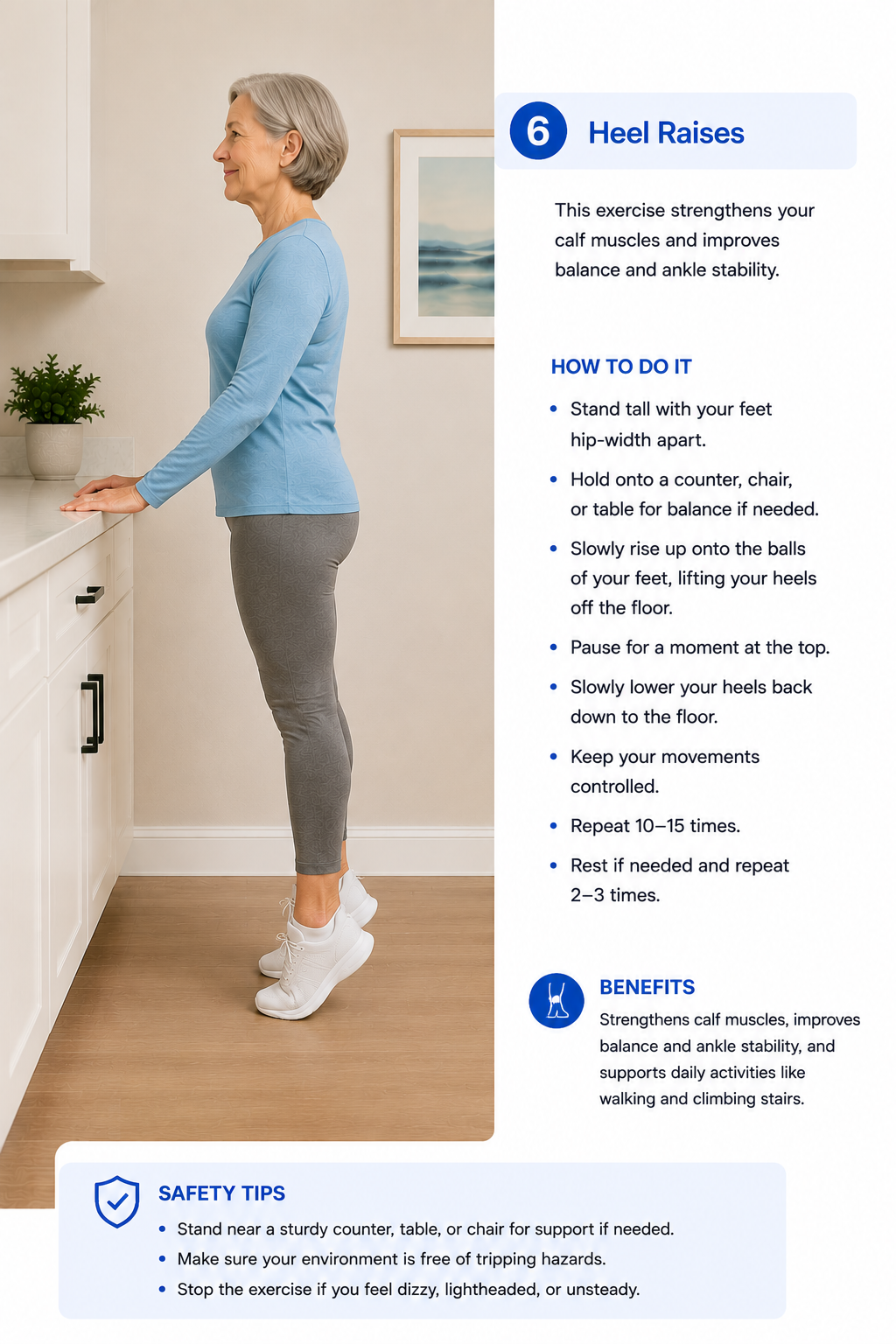
Heel Raises
Hold the counter and rise up onto your toes, then lower down slowly. Repeat 10–15 times.
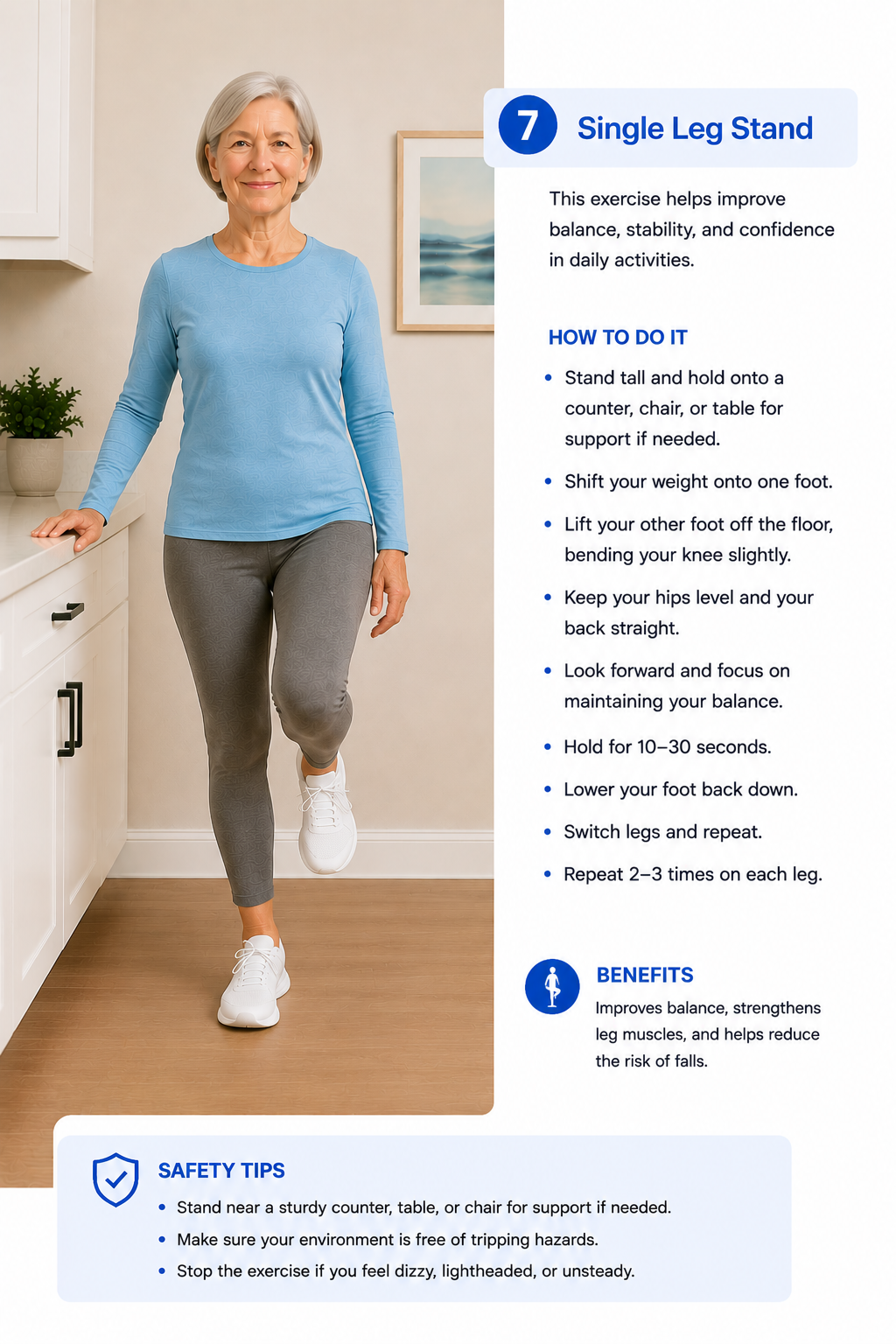
Single Leg Stand
Stand on one leg and hold for 10–20 seconds. Switch legs and repeat.
Common Mistakes to Avoid
- Looking down: Keep your eyes forward when possible.
- Moving too fast: Slow, controlled movements are safest.
- Skipping support: Use a counter, table, or chair when needed.
- Removing support too quickly: Progress gradually from full support to light fingertip support.
- Holding your breath: Breathe normally during each exercise.
- Pushing through dizziness: Stop if you feel lightheaded or unsafe.
When to See a Physical Therapist
Consider a physical therapy assessment if you experience:
- Recent falls
- Fear of falling
- Frequent balance loss
- Difficulty walking
- Need to hold furniture while walking
- Difficulty performing balance exercises
Frequently Asked Questions
Many older adults benefit from practicing balance exercises for seniors several days per week. Start with short sessions and increase slowly as tolerated.
They can be safe when performed near a sturdy support and matched to the person's ability level. Stop if you feel dizzy, lightheaded, or unsafe.
Yes. Balance often improves when exercises address strength, coordination, reaction time, walking safety, and confidence.
Common causes include weakness, reduced sensation, vision changes, medication side effects, stiffness, vestibular problems, and fear of falling.
Stop the exercise, hold onto a stable surface, and rest. If unsteadiness continues or you are worried about falling, speak with a healthcare provider or physical therapist.
Medical Review
This article was reviewed by licensed physical therapists at Continuity Healthcare and is intended for educational purposes only. It should not replace medical advice from your physician or healthcare provider.
Additional Resources
For additional information about balance, falls, and healthy aging, visit:
How Continuity Healthcare Can Help
Continuity Healthcare provides insurance-covered outpatient physical therapy in the comfort of your home. Our therapists help older adults improve balance, strength, walking safety, endurance, and confidence with daily activities.
Because therapy happens in your home, your therapist can look at how you move within your real-life environment and help you practice the skills that matter most to you.
Concerned About Balance Problems or Recent Falls?
A physical therapy assessment can help identify strength, balance, and safety concerns before they lead to a fall.
Questions? Call (913) 318-5104 or email info@continuityhs.com.
Continue Learning
Last updated: June 2026. Educational content only. Always seek medical advice for dizziness, falls, new weakness, chest pain, shortness of breath, sudden balance changes, or other concerning symptoms.