
The Best Chair Exercises for Seniors to Improve Strength, Balance, and Mobility
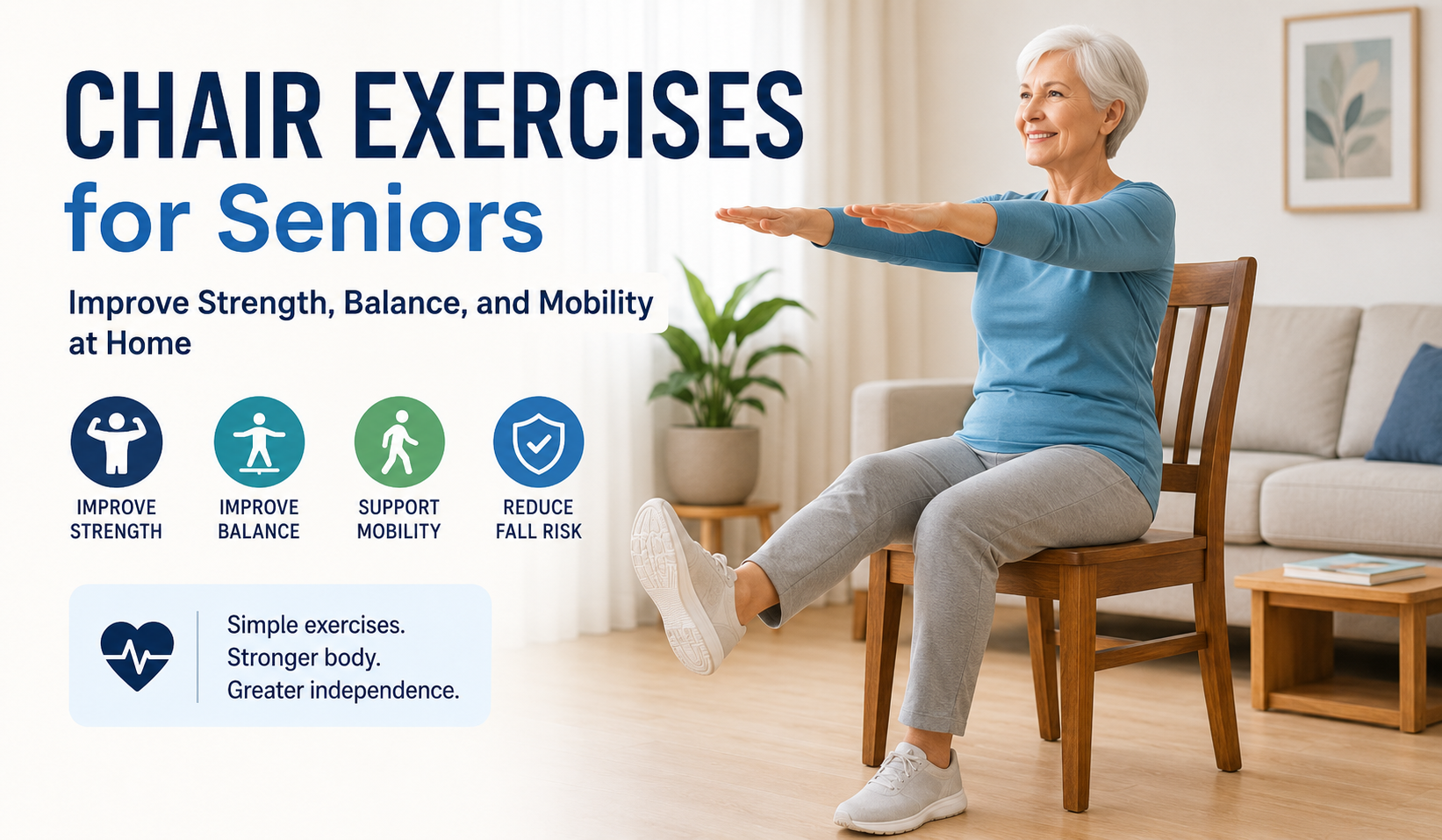
Stay active, improve confidence, and reduce fall risk with these simple chair exercises you can do at home.



Why Chair Exercises Matter
As we age, muscle strength, balance, and mobility naturally change. These changes can make everyday activities—like walking, climbing stairs, standing from a chair, or getting in and out of bed—more difficult.
Regular chair exercises can help maintain muscle strength, improve circulation, support joint mobility, and build confidence with daily movement. Even a few minutes each day can make a meaningful difference over time.
The best part? You do not need a gym membership or expensive equipment to get started.
16 Chair Exercises for Seniors
How to Do These Chair Exercises
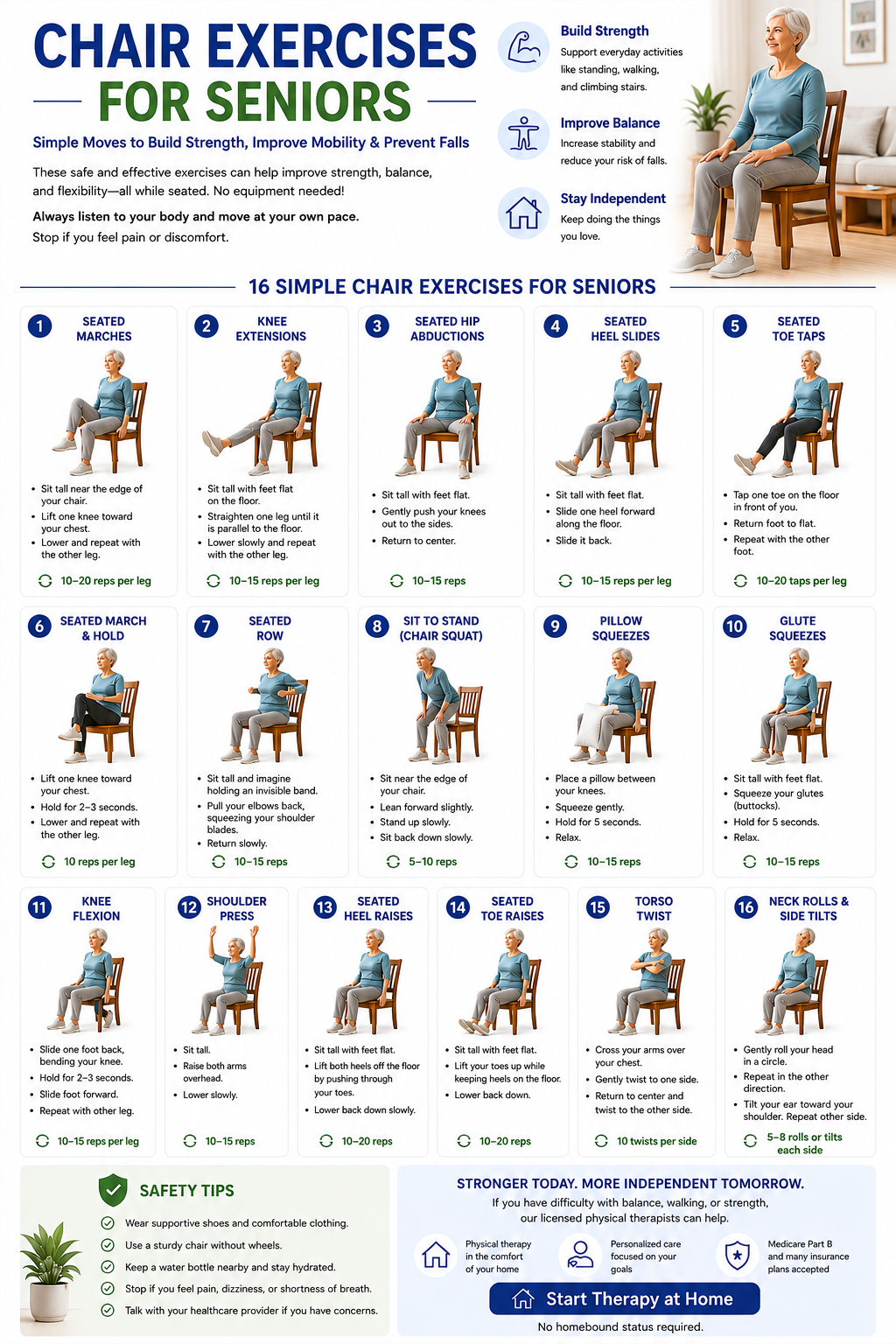
Use a sturdy chair without wheels. Move slowly, stay in control, and stop if you feel pain, dizziness, chest discomfort, or unusual shortness of breath.
Seated Marches
- Sit tall near the edge of your chair.
- Lift one knee toward your chest.
- Lower and repeat with the other leg.
Knee Extensions
- Sit with feet flat on the floor.
- Straighten one leg until it is parallel to the floor.
- Lower slowly and repeat with the other leg.
Seated Hip Abductions
- Sit tall with feet flat.
- Gently push your knees out to the sides.
- Return to center.
Seated Heel Slides
- Sit tall with feet flat.
- Slide one heel forward along the floor.
- Slide it back.
Seated Toe Taps
- Tap one toe on the floor in front of you.
- Return foot to flat.
- Repeat with the other foot.
Seated March & Hold
- Lift one knee toward your chest.
- Hold for 2–3 seconds.
- Lower and repeat with the other leg.
Seated Row
- Sit tall and imagine holding an invisible band.
- Pull your elbows back, squeezing your shoulder blades.
- Return slowly.
Sit to Stand (Chair Squat)
- Sit near the edge of your chair.
- Lean forward slightly.
- Stand up slowly, then sit back down slowly.
Pillow Squeezes
- Place a pillow between your knees.
- Squeeze gently.
- Hold for 5 seconds, then relax.
Glute Squeezes
- Sit tall with feet flat.
- Squeeze your glutes, or buttocks.
- Hold for 5 seconds, then relax.
Knee Flexion
- Slide one foot back, bending your knee.
- Hold for 2–3 seconds.
- Slide foot forward and repeat with the other leg.
Shoulder Press
- Sit tall.
- Raise both arms overhead.
- Lower slowly.
Seated Heel Raises
- Sit tall with feet flat.
- Lift both heels off the floor by pushing through your toes.
- Lower back down slowly.
Seated Toe Raises
- Sit tall with feet flat.
- Lift your toes up while keeping heels on the floor.
- Lower back down.
Torso Twist
- Cross your arms over your chest.
- Gently twist to one side.
- Return to center and twist to the other side.
Neck Rolls & Side Tilts
- Gently roll your head in a circle.
- Repeat in the other direction.
- Tilt your ear toward your shoulder and repeat other side.
Benefits of Chair Exercises
- Improve strength
- Improve balance
- Support mobility
- Reduce fall risk
- Support healthy aging and independence
- Improve confidence with walking and daily activities
Safety Tips Before You Start
- Use a sturdy chair without wheels.
- Wear supportive shoes.
- Move slowly and with control.
- Keep water nearby and stay hydrated.
- Stop if you feel pain, dizziness, or shortness of breath.
- Talk with your healthcare provider before starting a new exercise program if you have medical concerns.
When Exercise Alone May Not Be Enough
You may benefit from physical therapy if you:
- Have fallen recently
- Feel unsteady while walking
- Need assistance standing from a chair
- Avoid activities because of fear of falling
- Notice declining strength or endurance
A physical therapist can identify the underlying causes and create a plan tailored to you.
Want Personalized Help Improving Strength and Balance?
Continuity Healthcare provides outpatient physical therapy in the comfort of your home.
- ✓ Medicare Part B accepted
- ✓ No homebound requirement
- ✓ Designed for older adults
- ✓ Family & caregiver friendly
Related Articles
Stay active. Stay independent. We're here to help you move with confidence—at home.
Start Therapy at Home